




What is LED Flicker? How to Check Flicker for Commercial Lighting Projects
What Is LED Flicker? How to Check Flicker for Commercial Lighting Projects
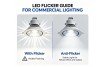
Many lighting buyers focus heavily on color temperature, CRI and lumen output when sourcing LED lights for commercial projects. However, one critical factor is often overlooked: LED flicker. Some flicker is visible to human eyes, while high-frequency flicker cannot be seen directly, yet it may still lead to eye strain, headaches and visual fatigue after long exposure. This risk matters a lot for retail shops, art galleries, offices and showrooms.
What Is LED Flicker?
LED flicker refers to the rapid fluctuation of light brightness over time. We can divide it into two main types:
1.Visible flicker: Obvious flashing that people can notice directly, usually caused by poor power supply or unstable voltage. It is unacceptable for most commercial applications.
2.Invisible high-frequency flicker: The light flashes at a rate faster than human eyes can detect. It looks steady, but the light output still cycles up and down. This hidden flicker is easy to ignore but harmful for long-time viewing.
Two Core Metrics: Flicker Index vs Flicker Percentage
When you ask suppliers for flicker data, these two values are the most common standards.
- Flicker Percentage: Shows how much the brightness changes between peak and minimum value. Lower percentage means more stable light.
- Flicker Index: Evaluates the overall light fluctuation, widely adopted by lighting test labs.
For high-demand projects such as art galleries and clothing retail, engineers usually require low flicker index and low flicker percentage to guarantee consistent color presentation.
What Causes LED Flicker?
Most flicker problems come from the driver:
1.Low-quality LED drivers with unstable current output. Cheap drivers often cut corners on components, resulting in hidden flicker.
2.Dimming mismatch. If the LED lamp and dimmer are incompatible, flickering or strobing will happen.
3.Fluctuation of input voltage on site. Unstable power grid in some overseas construction sites can also trigger light flicker.
Different Requirements for Different Commercial Projects
- Art galleries & clothing retail: Strict low-flicker requirement. Flicker will distort fabric texture, artwork colors and affect customer shopping experience.
- Offices & meeting rooms: Staff stay under lighting for 8 hours every day. Anti-flicker lighting helps reduce tired eyes.
- Warehouses and production workshops: Severe flicker may interfere with machine vision equipment and create safety hazards.
Practical Ways Buyers Check LED Flicker Before Bulk Orders
1.Quick screening with a smartphone camera Point your phone camera at the LED light. If rolling dark stripes appear on the screen, the light has obvious flicker. Important note: This is only a simple preliminary test. It cannot replace official laboratory test reports.
2.Request formal flicker test reports from your lighting supplier For large commercial projects, always ask for certified test documents with flicker index and flicker percentage data.
Common Misconception: High Frequency Equals Zero Flicker
A lot of customers believe high-frequency lights have no flicker at all. This is wrong. High frequency just makes flicker invisible. The light still fluctuates. Only qualified drivers can achieve true low-flicker performance.
Final Tip
If your project requires reliable anti-flicker commercial LED lights, do not only judge by appearance. Confirm flicker parameters and test reports in advance to avoid rework after installation.
If you need anti-flicker LED lights for your project, contact us for detailed test data.
Search Articles
Blog Categories
Latest News
What is LED Flicker? How to Check Flicker for Commercial...
What Is LED Flicker? How to Check Flicker for Commercial...
What is L70 and L80 in LED Lighting? A Guide for...
When sourcing LED lights for commercial or architectural...
What’s Color Temperature? How to Choose Kelvin for...
When planning a commercial lighting project, many buyers...


