




Lumens vs Watts: What’s the Difference for Commercial LED Lighting Projects
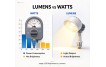
If you have ever sent RFQ for commercial LED lights, you may notice a common mistake among buyers: judging brightness only by wattage. Some customers think higher watts mean brighter lights, but this logic no longer works for modern LED products. Understanding lumens and watts clearly helps you avoid overspending on power or getting lights too dim for your project.
What Are Watts? Watts (W) measures the power consumption of a light fixture. It tells you how much electricity the lamp uses when working. It is NOT a measurement of brightness.
Old halogen or incandescent lights had low efficiency, so high wattage usually brought strong light. LEDs are energy-saving. Two LED lamps with the same wattage can have totally different brightness, due to chip quality, heat dissipation and optical design. A high-watt LED with poor lumen output wastes electricity and budget.
What Are Lumens? Lumens (lm) is the unit of luminous flux. It shows the actual visible light output of a luminaire. More lumens = brighter light.
For commercial projects, lumens is the key number you should check first when comparing samples and quotations. When you need bright retail spotlights or soft office ambient lighting, lumen target decides whether the lighting design meets your requirement.
Recommended Lumen Range for Typical Commercial Spaces
- Retail shop display spotlights: 1200lm – 3000lm per fixture
- General office ambient lighting: 800lm – 1800lm per panel light
- Showroom main lighting: 2000lm – 4000lm per track light
- Corridors and storage areas: 400lm – 900lm per light
Common Pitfalls When Comparing LED Lights
1.Judging brightness purely by watts. Two 30W LED track lights may have 2200lm and 2800lm separately.
2.Ignoring lumen depreciation. Even if the initial lumen is high, poor thermal design leads to fast brightness drop after months.
3.Over-specifying wattage. Buying higher power than needed increases electricity bills for end users.
Checklist for Your RFQ & Lighting Quotation
1.Confirm required lumen output for each area with the lighting designer
2.Compare lumens, not only watts, among different suppliers
3.Ask for lumen maintenance report or photometric file for big projects
4.Balance brightness, energy cost and fixture budget
Final Thought Watts tells you energy cost, lumens tells you light brightness. Once you stop relying on wattage to judge LED brightness, you can make more accurate lighting specification and better RFQ decisions for retail, office and showroom projects. If you need photometric data or lighting layout suggestions for your next commercial project, feel free to contact our team.
Search Articles
Blog Categories
Latest News
Lumens vs Watts: What’s the Difference for Commercial...
If you have ever sent RFQ for commercial LED lights, you may...
What Is Power Factor (PF) in LED Lighting & Why It...
For commercial lighting contractors and project buyers, a...
What Is LED Driver? Types & How to Select the Right...
If you have sourced LED lights for retail, office or...


